
How to Get Rid of Dark Circles Under Eyes: A Type-by-Type Guide
Affiliate disclosure: As an Amazon Associate we earn from qualifying purchases at no extra cost to you.
Last updated: August 26, 2026
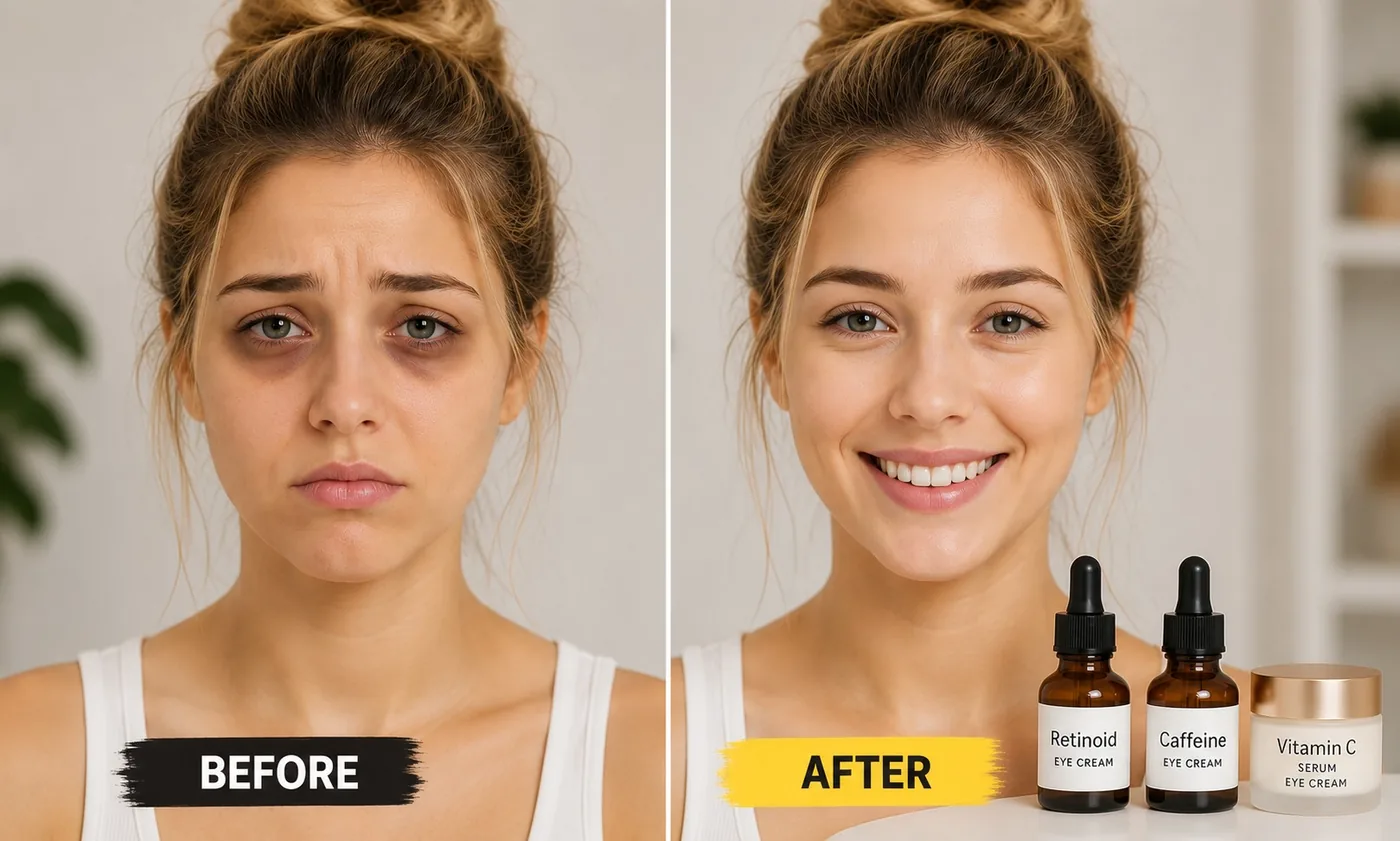
Waking up to a "raccoon-eyed" reflection is one of the most common and most misunderstood skin complaints out there. Most guides throw the same five home remedies at you: cucumbers, cold spoons, and more sleep. If you've already tried all of that and nothing's changed, it's usually because nobody told you which type of dark circle you actually have. Once you know that, the fix stops being guesswork.
Quick Picks by Dark Circle Type
| Type | Product | Est. Price | Action |
|---|---|---|---|
| Pigmented circles | CeraVe Vitamin C Eye Cream | $19.99 | View on Amazon |
| Vascular circles | The Ordinary Caffeine Solution 5% + EGCG | $11.90 | View on Amazon |
| Structural circles | Naturium Multi-Peptide Eye Cream | $24.00 | View on Amazon |
CeraVe Vitamin C Eye Cream
$19.99
The Ordinary Caffeine Solution 5% + EGCG
$11.90
Naturium Multi-Peptide Eye Cream
$24.00
As an Amazon Associate we earn from qualifying purchases at no extra cost to you. Prices are estimates and may change.
Common Causes of Dark Circles
Dermatologists generally group under-eye darkness into three overlapping categories: pigmented, vascular, and structural. Most people have a mix of all three, which is exactly why a single serum rarely solves the whole problem.
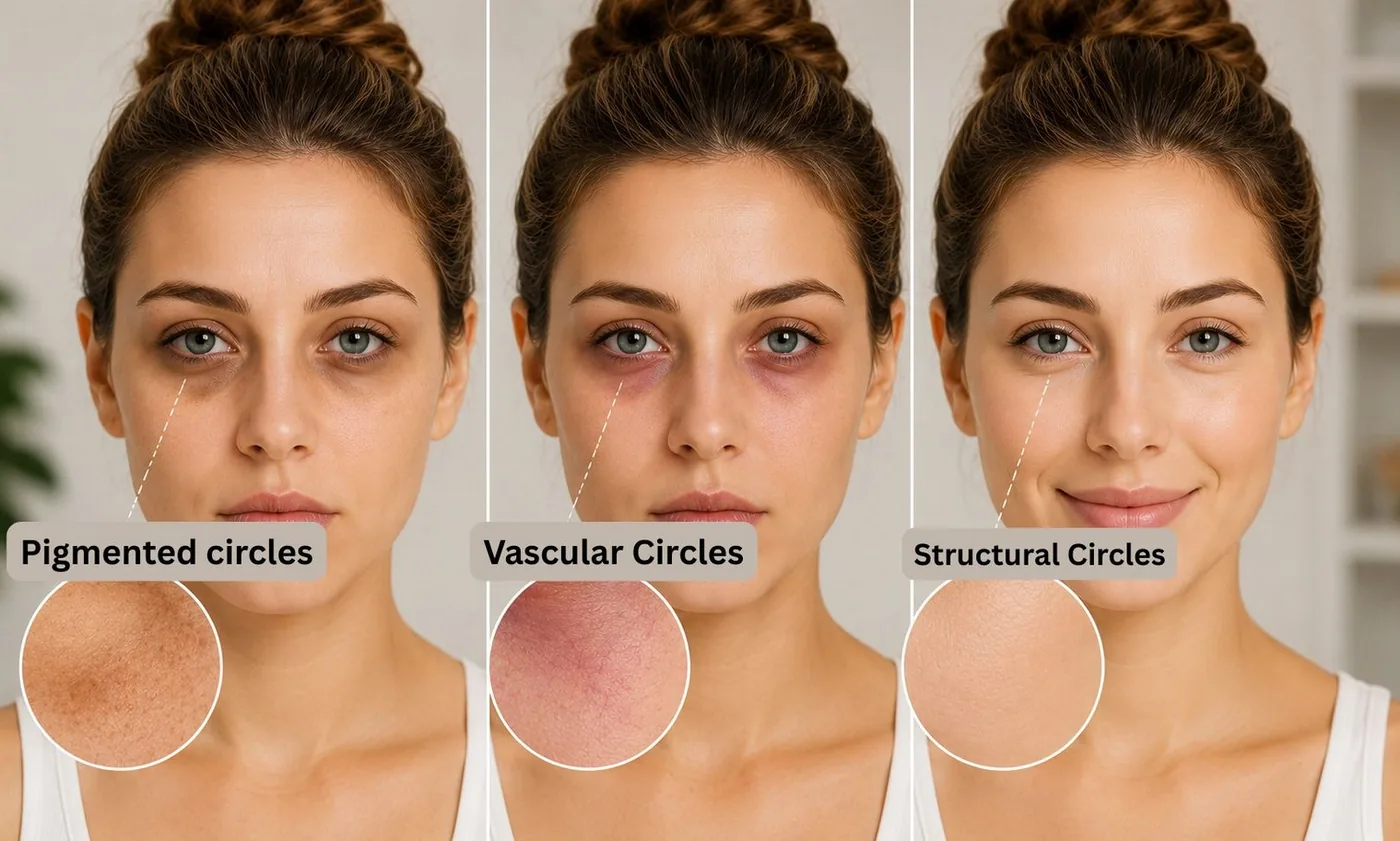
1. Pigmented Circles (Too Much Melanin)
This is excess melanin deposited in the thin skin under the eyes, and it's often genetic if a parent has noticeably dark under-eyes, you're more likely to as well, sometimes from childhood. It's also more visible in medium-to-deep skin tones and can be worsened by:
- Sun exposure — UV rays trigger melanin production, and the eye area rarely gets sunscreen coverage
- Rubbing or scratching — chronic eye rubbing from allergies or eczema causes friction-based pigmentation over time
- Post-inflammatory pigmentation: leftover discoloration after any irritation, insect bite, or dermatitis flare in the area
2. Vascular Circles (Blood Vessels Showing Through)
The skin under your eyes is some of the thinnest on your body thinner than eyelid skin, even. Skin surface blood vessels may show up blue, purple or even greenish through the skin. This is worsened by
- Poor sleep and screen strain sleep debt and long stretches staring at screens can dilate the small vessels around the eyes
- Nasal congestion and allergies often called "allergic shiners," seasonal and dust allergies cause blood to pool in the small veins under the eyes because congestion restricts normal drainage
- Dehydration — under-hydrated skin looks thinner and more translucent, making vessels more visible, and the under-eye area also appears more sunken because it sits so close to the bone
3. Structural Circles (Shadow, Not Color)
The fat pad beneath the eyes becomes flatter and loses volume as we grow older, and the tear trough (the crease between the lower lid and cheek) may become sunken. This is why some dark circles don't react to creams, regardless of the ingredients used. This is more likely to become apparent from the mid-20s onward and is mostly a result of genetics and aging.
Nutritional and Lifestyle Contributors
Beyond the three types above, a few underlying factors are worth ruling out:
- Iron deficiency (anemia) — low iron reduces oxygen delivery to skin, which can create a duller, grayer under-eye tone
- Low vitamin C, K, or B12 — these support collagen and healthy circulation; deficiencies can make circles more pronounced
- Chronic stress and cortisol — stress hormones can affect skin barrier function and sleep quality simultaneously, compounding the problem
- Certain medications — some glaucoma eye drops, for example, have been linked to periorbital darkening as a side effect worth flagging to your doctor if it develops after starting a new prescription
How to Treat Dark Circles
For Pigmented Circles
- Wear a broad-spectrum SPF around the eye area daily this alone prevents a large share of new pigmentation. Not sure what strength or formula suits your skin tone and lifestyle? Our SPF Calculator gives you a personalized recommendation in under a minute.
- Look for vitamin C in an eye-safe formulation to support collagen and brighten discoloration over time just confirm it plays nicely with anything else in your routine using our Vitamin C and Niacinamide compatibility guide.
Best for pigmented circles
CeraVe Vitamin C Eye Cream
A gentle, eye-safe vitamin C with hyaluronic acid and ceramides — brightens discoloration without the sting of a high-percentage facial serum.
Check Price on Amazon →Daily eye-area SPF
EltaMD UV Clear SPF 46
Lightweight zinc oxide sunscreen that most people can wear right up to the orbital bone without stinging — the single best prevention for new pigmentation.
Check Price on Amazon →- Retinoid-based eye creams (start low-strength) can gradually reduce melanin content, though they're not suitable during pregnancy or for very sensitive skin. If you're new to retinoids, our Complete 2026 Retinol Guide walks through how to introduce them without wrecking your barrier, and our Retinol vs. Retinoid breakdown explains which strength is right for a delicate area like the under-eye.
- Avoid rubbing; if allergies are the trigger, treating the allergy (antihistamines, allergen avoidance) often does more than any topical
Gentle retinoid option
RoC Retinol Correxion Under Eye Cream
A long-standing, well-tolerated retinol formulated specifically for the under-eye area. Start two or three nights a week and build up slowly.
Check Price on Amazon →For Vascular Circles
- Cold compresses genuinely help here the cold constricts surface blood vessels, which is why chilled spoons and cucumber slices anecdotally work, even though the mechanism hasn't been rigorously studied
- Caffeine-based eye creams work on the same principle: caffeine tightens blood vessels and can visibly reduce puffiness and blue-toned shadowing
- Sleep with your head slightly elevated to encourage fluid drainage away from the face overnight
- Prioritize hydration pairing a humectant with a barrier-supporting ingredient makes a real difference here, and our Ceramides and Hyaluronic Acid compatibility guide shows how to layer them correctly and address any nasal allergies at the source
Best for vascular circles
The Ordinary Caffeine Solution 5% + EGCG
The most cost-effective caffeine serum available — constricts surface vessels to reduce puffiness and blue-toned shadowing. Keep it cold for an extra depuffing effect.
Check Price on Amazon →Not sure where any of these actives fit into your existing AM/PM steps? Our Skincare Layering Order Guide covers the correct sequence so new additions actually absorb instead of pilling on the skin.
For Structural Circles
This is the category where topicals genuinely hit a ceiling. Realistic options include:
- Peptide or collagen-supporting eye creams to slow further thinning (manages, doesn't reverse) our Anti-Aging Regimen Builder can put together an age-appropriate protocol around this
- Color-correcting concealer as a cosmetic bridge a peach or salmon-toned corrector under concealer neutralizes blue/purple tones far better than concealer alone
- Professional treatment (below), since volume loss doesn't respond to skincare
Peptide support
Naturium Multi-Peptide Eye Cream
Peptides with squalane and hyaluronic acid to support collagen and thicken thin under-eye skin over time. Manages further thinning rather than reversing volume loss.
Check Price on Amazon →Cosmetic bridge
Tarte Colored Clay CC Undereye Corrector
A peach-toned corrector that cancels blue and purple shadowing instantly — the fastest fix while longer-term treatments do their work.
Check Price on Amazon →When Home Remedies Aren't Enough: Professional Options

If you've been consistent with the right approach for 8–12 weeks and see no change, that's usually a sign the cause is structural or medical rather than cosmetic. A dermatologist can typically identify which of the three types you're dealing with in a single visit and may recommend:
- Chemical peels to address stubborn pigmentation
- Laser treatment to target both pigment and superficial blood vessels
- Dermal fillers to restore lost volume in the tear trough (a common fix for structural shadowing)
- Platelet-rich plasma (PRP) to stimulate collagen and thicken the skin over time
If you're weighing which of these routes fits your goals, budget, and downtime tolerance, our Treatment Finder matches you to suitable options and builds a sequenced timeline, and the Treatment Cost Estimator gives you a realistic price range before you sit down for a consultation. Working toward a specific date, like a wedding? The Cosmetic Treatment Finder & Timeline Planner reverse-engineers a schedule so you're healed and settled beforehand, not mid-recovery.
You should also see a doctor if dark circles appear suddenly, are accompanied by significant swelling, or show up alongside symptoms like fatigue, dizziness, or shortness of breath these can occasionally point to anemia or another condition worth ruling out, rather than a purely cosmetic issue.
Frequently Asked Questions
Conclusion
When a wide variety of individuals struggle with dark circles, there is no single solution to the problem and so the recommendation of sleeping more fails to work for many. Determine if your skin is a pigmented, structural, vascular, or (most often) a combination of these, and add skins to the regimen accordingly: SPF and brightening actives for pigment, cold and caffeine for vessels, and volume for shadow. Before you add anything new to your routine, run it past our free ingredient conflict checker to make sure it won't cancel out or fight with what you're already using, and if you'd rather have a full AM/PM plan built for you around your skin type and budget, our Routine Planner does exactly that.
Content on this site is written for educational purposes. It is not medical advice. Always consult a qualified dermatologist for personal skincare concerns.