
Retinol vs. Retinoid: What's the Real Difference—and Which One Should You Actually Use?
I have acne that will not clear up. The fine lines on my face are getting deeper. I also have spots that just will not go away. If you have looked for solutions to these problems you will always see two things: retinol and retinoids. Now let us break down the difference between retinol and retinoids.
Last updated: May 20, 2026
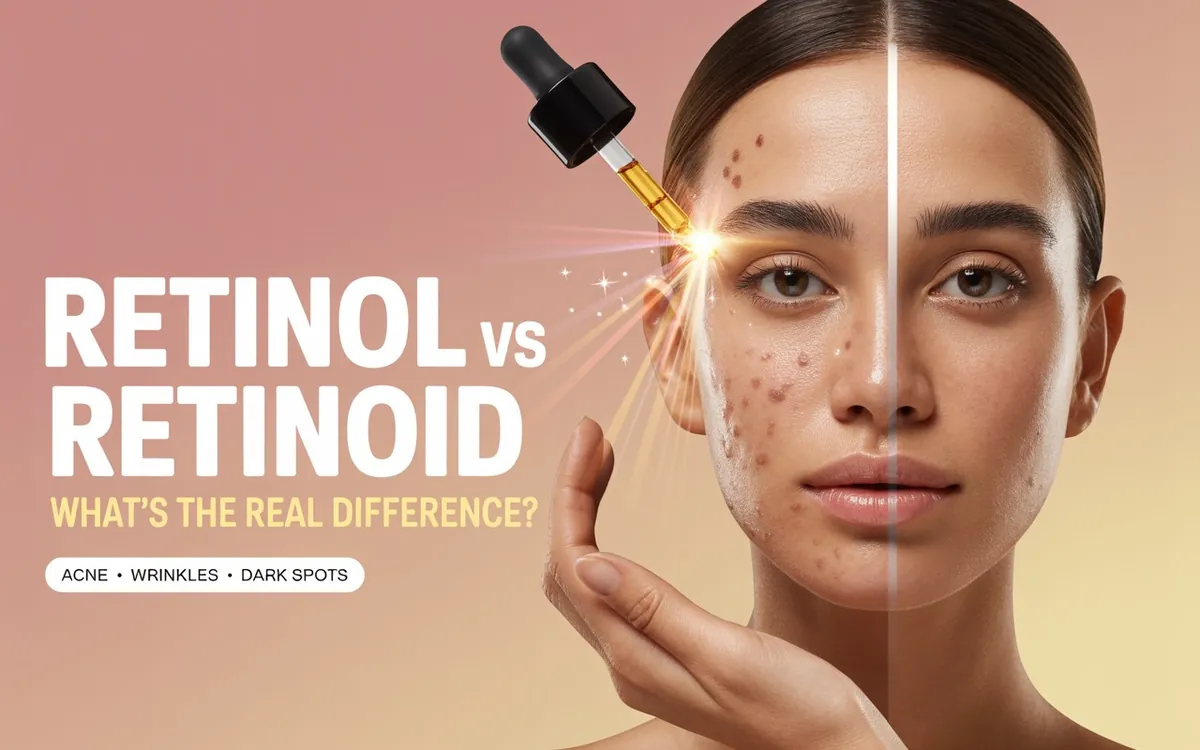
Quick Answer: Retinol vs Retinoid
- Retinoids are a group of vitamin A related compounds.
- Retinol is one kind of retinoid — it is gentler. You can buy it without a prescription.
- Prescription retinoids, such as tretinoin and adapalene, are more powerful and work quicker.
- Retinol has a gentler effect and causes less problems.
If you're a beginner, start with retinol. If you have persistent acne, prescription retinoids may be more effective.
What Are Retinoids?
Retinoids are a type of compound that comes from vitamin A. They help control how skin cells grow and what they do. These retinoids go into skin cells and attach to something called retinoic acid receptors (or RARs for short). When they do this, they start a few things happening in the skin cells:
- Increased cell turnover
- Boosted collagen production
- Regulation of sebum (oil) production
- Reduction of inflammation
- Normalization of abnormal keratinization
Retinoids have a lot of effects on the skin. Doctors who treat skin problems use retinoids because they really help people who have acne. They also help with lines and wrinkles. They are good for skin that is damaged from the sun.
In simple terms: retinoids make the skin work better and look younger.
Recommended Product
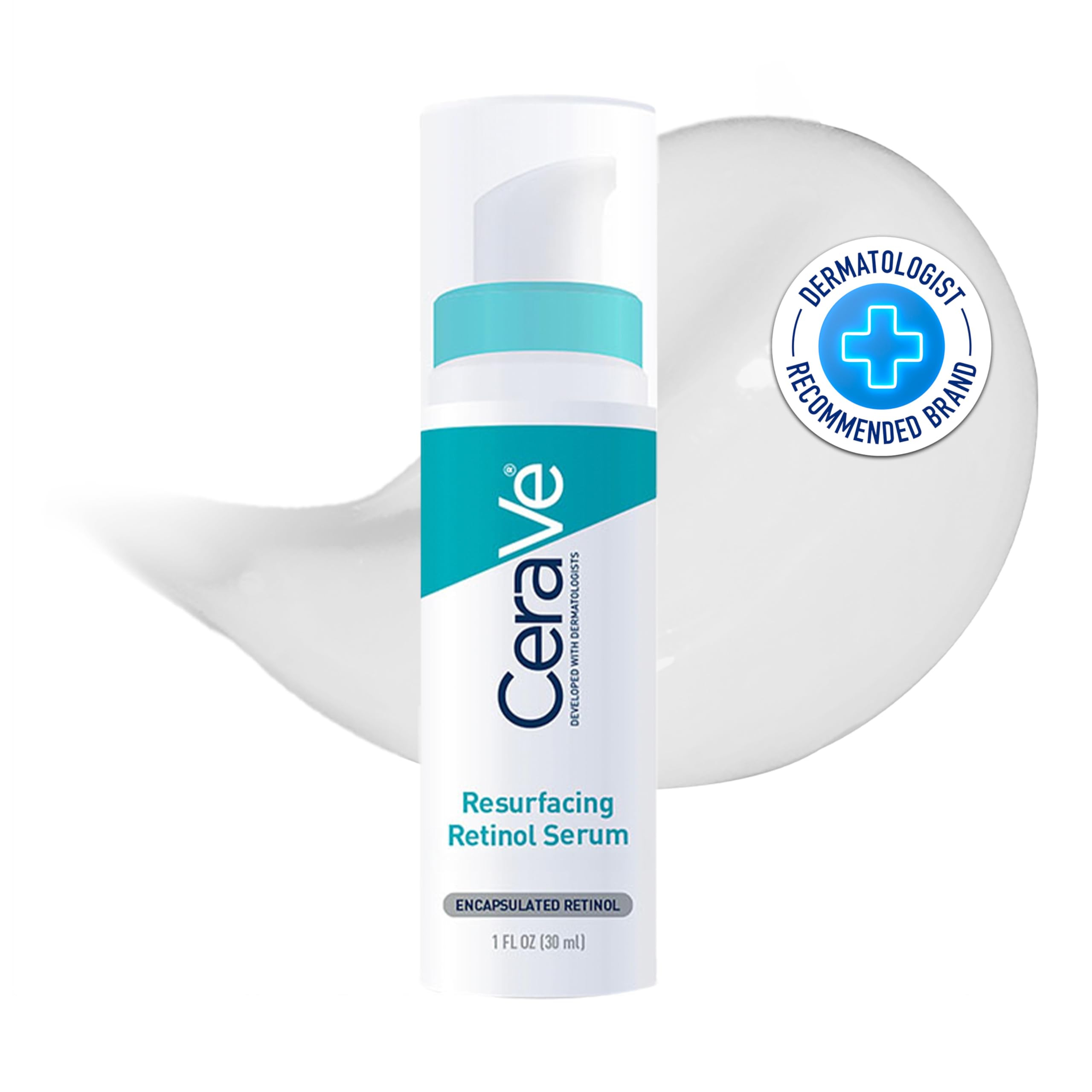
CeraVe Retinol Serum for Post-Acne Marks
This product has retinol that's gentle on the skin and it also has ceramides. It is a great choice for people who are just starting to use retinol products.
View on AmazonWhat Is Retinol?
Retinol is one member of the retinoid family—and the most common form found in non-prescription skincare. But here's the important part:
Retinol is not immediately active when applied to the skin.
It must convert through a series of steps:
Retinoic acid is special because it can directly bind to receptors and you can see the changes it makes. On the other hand, retinol needs to be converted first so it takes longer to work. This is a good thing for people with sensitive skin because retinol is usually less irritating. Beginners can use retinol too — it is better for them because their skin can tolerate it more easily.
The Retinoid Family: From Mild to Strong
Over-the-Counter Retinoids
- • Retinyl palmitate
- • Retinyl acetate
- • Retinyl linoleate
- • Retinol
- • Retinal (retinaldehyde)
Prescription Retinoids
- • Adapalene
- • Tretinoin (pure retinoic acid)
- • Tazarotene
- • Isotretinoin (oral, severe cystic acne)
Strength Ranking (Lowest to Highest):
Retinyl esters → Retinol → Retinal → Adapalene → Tretinoin → Tazarotene
The closer a compound is to pure retinoic acid, the stronger and faster it acts.
Recommended Product
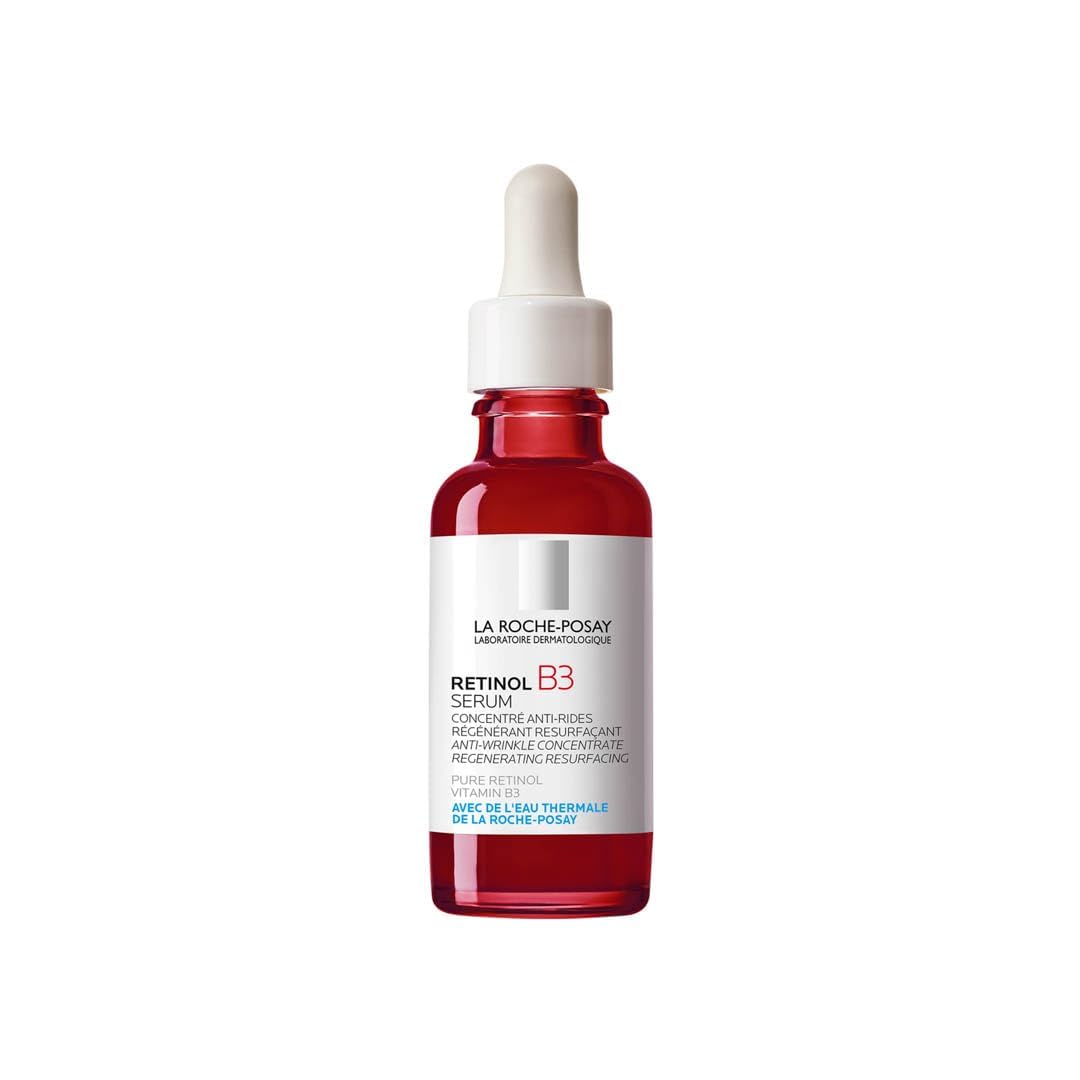
La Roche-Posay Retinol B3 Serum
0.3% pure retinol with niacinamide and hyaluronic acid — reduces wrinkles with less irritation.
View on AmazonRetinol vs Retinoid: Side-by-Side Comparison
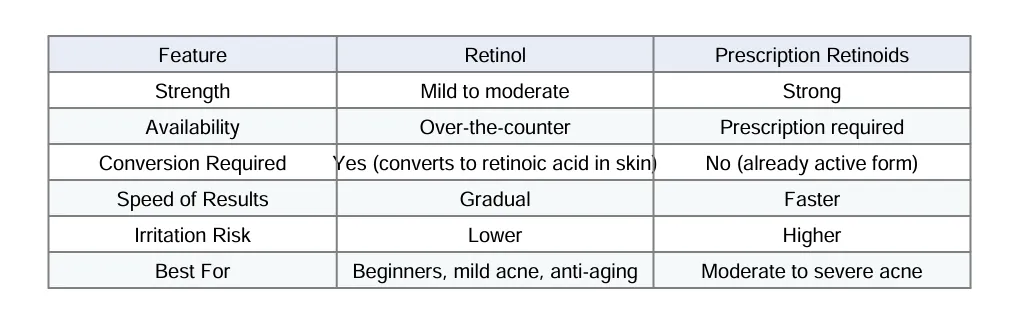
| Feature | Retinol | Prescription Retinoids |
|---|---|---|
| Strength | Mild to moderate | Strong |
| Availability | Over-the-counter | Prescription required |
| Conversion Required | Yes (converts to retinoic acid) | No (already active form) |
| Speed of Results | Gradual | Faster |
| Irritation Risk | Lower | Higher |
| Best For | Beginners, mild acne, anti-aging | Moderate to severe acne |
The real difference comes down to potency and skin tolerance.
Retinol vs Retinoid for Acne
Acne happens when there is too much oil and it blocks the pores, dead skin cells build up, bacteria grow, and then the skin gets red and sore. Retinoids treat acne by getting to the bottom of the problem. They do this in several ways including:
- Stopping microcomedones from forming
- Unclogging pores (comedolytic effect)
- Helping the skin normalize by making sure the hair follicles are working properly
- Reducing oil production
- Reducing inflammation by supporting anti-inflammatory pathways
For Mild Acne
Retinol may be enough — especially if breakouts are occasional.
For Moderate to Severe Acne
Prescription options like adapalene or tretinoin usually work more effectively. Most people see improvement in 8–12 weeks, but consistency is critical. One common mistake? Stopping too early because of mild irritation.
Recommended Product
Differin Adapalene Gel 0.1%
The only prescription-strength retinoid available OTC — widely recommended for acne.
View on AmazonRetinol vs Retinoid for Anti-Aging
Both retinol and prescription retinoids stimulate collagen synthesis and improve dermal matrix remodeling. This helps reduce:
Top Rated Products For This Routine
As an Amazon Associate we earn from qualifying purchases. This is at no extra cost to you.
- Fine lines and wrinkles
- Uneven texture
- Hyperpigmentation
- Sun damage
Prescription retinoids may deliver faster wrinkle reduction. Retinol produces more gradual improvement with fewer side effects. For many adults starting anti-aging skincare in their late 20s or 30s, retinol is often sufficient.
How to Use Retinol Properly (To Avoid Irritation)
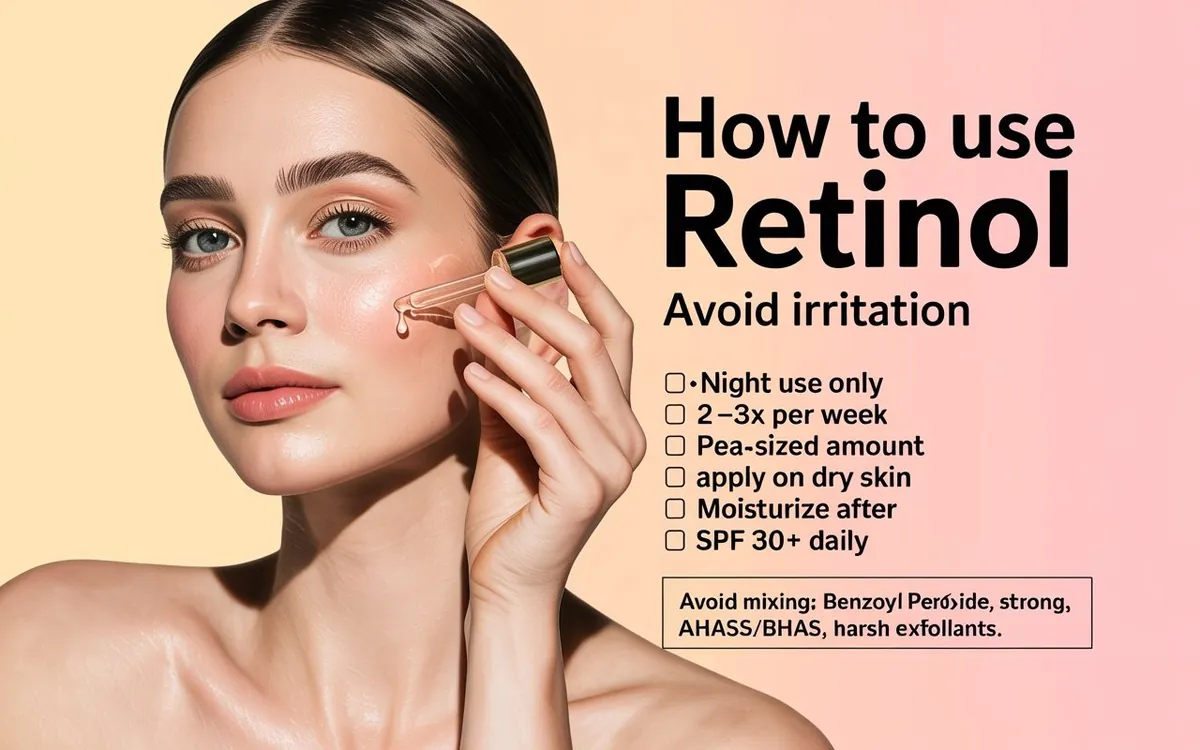
Lots of people stop using retinol. This is not because retinol does not work. It is because they start using it too much. Follow this plan to start using retinol:
- Apply only at night.
- Start 2–3 times per week.
- Use a pea-sized amount.
- Apply to completely dry skin.
- Follow with a barrier-supporting moisturizer.
- Wear SPF 30+ daily (non-negotiable).
⚠️ Avoid combining with:
- • Benzoyl peroxide
- • Strong AHAs or BHAs
- • Harsh physical exfoliants
Use our ingredient conflict checker to verify which ingredients are safe to combine with retinol.
Gradual introduction reduces the risk of barrier damage.
Recommended Product
CeraVe Moisturizing Cream
Essential ceramide-rich moisturizer to support your skin barrier during retinoid use.
View on AmazonThe "Retinization" Phase: What to Expect
When starting retinoids, temporary side effects are common:
- Redness
- Peeling
- Dryness and flaking
- Mild purging
This adjustment period usually goes on for a few weeks — around 2 to 6 weeks. If you get a burning feeling or your skin gets really swollen or the irritation just will not go away, you should go see a dermatologist who is certified by a board. We have a timeline that shows what happens with retinol before and after you start using it — it breaks it down week by week.
Retinol Purge vs Breakout
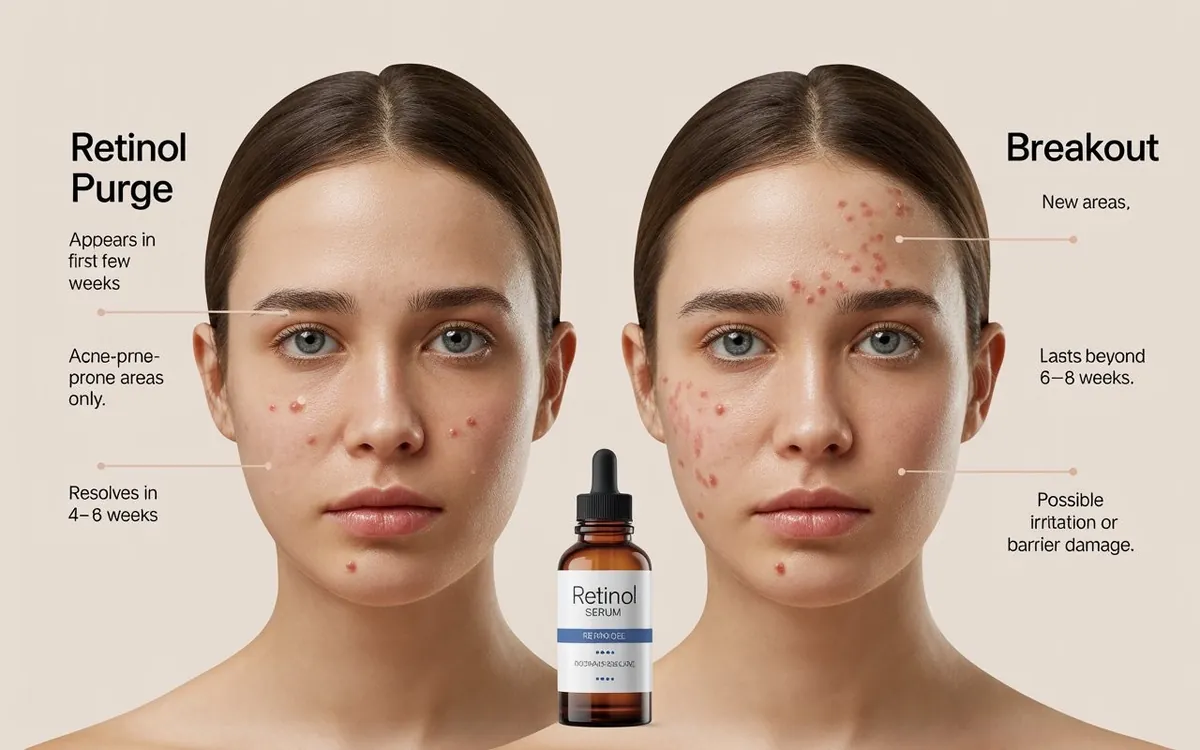
This is where many users panic. Understanding the difference prevents unnecessary discontinuation.
A Purge:
- • Happens in acne-prone areas
- • Appears within the first few weeks
- • Resolves within 4–6 weeks
A Breakout:
- • Appears in new areas
- • Persists beyond 6–8 weeks
- • May show irritation or problems with the skin barrier
How Long Does It Take to See Results?
Retinoids take time to work. They are not quick fixes. You have to use retinoids for a while to see changes.
8–12
weeks for Acne
12–24
weeks for Fine Lines
3–6
months for Pigmentation
Improvements happen slowly as collagen production and cell turnover get back to normal.
Recommended Product
EltaMD UV Clear Broad-Spectrum SPF 46
Widely recommended daily sunscreen — mandatory when using retinoids.
View on AmazonWho Should Avoid Retinoids?
Retinoids are really strong. They can do a lot of things to your body. You should be careful with them because they are not good for everybody. If you are in certain situations you should stay away from retinoids or talk to a doctor or nurse:
- If you are pregnant or breastfeeding
- If you have eczema or rosacea
- If your skin is really damaged and does not work like it should — this is called having a severely compromised skin barrier
Prescription-strength retinoids should always be used under medical supervision.
Final Verdict: Which One Should You Choose?
Choose Retinol if:
- ✔ You're new to vitamin A skincare
- ✔ Your skin is sensitive
- ✔ You want gradual anti-aging benefits
- ✔ You experience mild breakouts
Choose a Prescription Retinoid if:
- ✔ You have persistent or moderate acne
- ✔ You want faster clinical-level results
- ✔ You are under dermatological care
Both work. The difference lies in strength, speed, and tolerance.
Check Retinol Compatibility
Use our Skincare Conflict Checker to verify which ingredients are safe to combine with retinol:
Retinol + Niacinamide
Recommended For This
Best OTC retinol for beginners — a true retinoid that converts to retinoic acid in the skin.
As an Amazon Associate we earn from qualifying purchases. This is at no extra cost to you.
Safe to layer — niacinamide reduces retinol irritation.
Retinol + Hyaluronic Acid
Recommended For This
Best OTC retinol for beginners — a true retinoid that converts to retinoic acid in the skin.
As an Amazon Associate we earn from qualifying purchases. This is at no extra cost to you.
Safe — HA hydrates while retinol works.
Retinol + Vitamin C
Recommended For This
Best OTC retinol for beginners — a true retinoid that converts to retinoic acid in the skin.
As an Amazon Associate we earn from qualifying purchases. This is at no extra cost to you.
Use at different times for best results.
Retinol + Glycolic Acid
Recommended For This
Best OTC retinol for beginners — a true retinoid that converts to retinoic acid in the skin.
As an Amazon Associate we earn from qualifying purchases. This is at no extra cost to you.
Can increase irritation — alternate nights.
Retinol + Benzoyl Peroxide
Recommended For This
Best OTC retinol for beginners — a true retinoid that converts to retinoic acid in the skin.
As an Amazon Associate we earn from qualifying purchases. This is at no extra cost to you.
BP can deactivate retinol — avoid same routine.
Retinol + Azelaic Acid
Recommended For This
Best OTC retinol for beginners — a true retinoid that converts to retinoic acid in the skin.
As an Amazon Associate we earn from qualifying purchases. This is at no extra cost to you.
Complementary pair for acne and pigmentation.
Complete Your Routine — Shop The Products We Recommend

For advanced users only — strongest OTC retinol available.
As an Amazon Associate we earn from qualifying purchases. This is at no extra cost to you.
Frequently Asked Questions
If you want to put this into practice, you can map every step in the right order with our skincare routine planner, design a targeted regimen using our anti-aging routine builder, see what each bottle actually costs per application with our cost per use calculator, and compare prices for in-office options with our treatment cost estimator.
Continue Reading
Content on this site is written for educational purposes. It is not medical advice. Always consult a qualified dermatologist for personal skincare concerns.
Written by me
Skincare Researcher & Founder of Skin Care Conflict
I built this site after a bad reaction from mixing two skincare ingredients I'd assumed were fine together.
When I went looking for answers, I found the same problem everywhere — plenty of opinions, very little explanation. Nobody telling me why two things shouldn't go on my face on the same night, or whether the serum at the back of my cabinet had gone off, or what a treatment should actually cost before walking into a clinic.
So I spent a long time reading formulation chemistry and published dermatology research, and built the ingredient checker I wanted when I needed it. Then I kept going, because the same gaps kept showing up — which is why there's now a routine planner, an expiry checker, a treatment cost estimator and several other tools.
Everything here is free, and it exists because I couldn't find it anywhere else. I'm not a dermatologist, and this site isn't a substitute for one. It's the resource I wish I'd had.
All articles on this site are written or reviewed for accuracy. For personalised advice, we always recommend consulting a qualified dermatologist.