
Is a Skincare Fridge Worth It? An Honest Answer Based on Ingredient Chemistry
Affiliate disclosure: As an Amazon Associate we earn from qualifying purchases at no extra cost to you.
Last updated: August 19, 2026
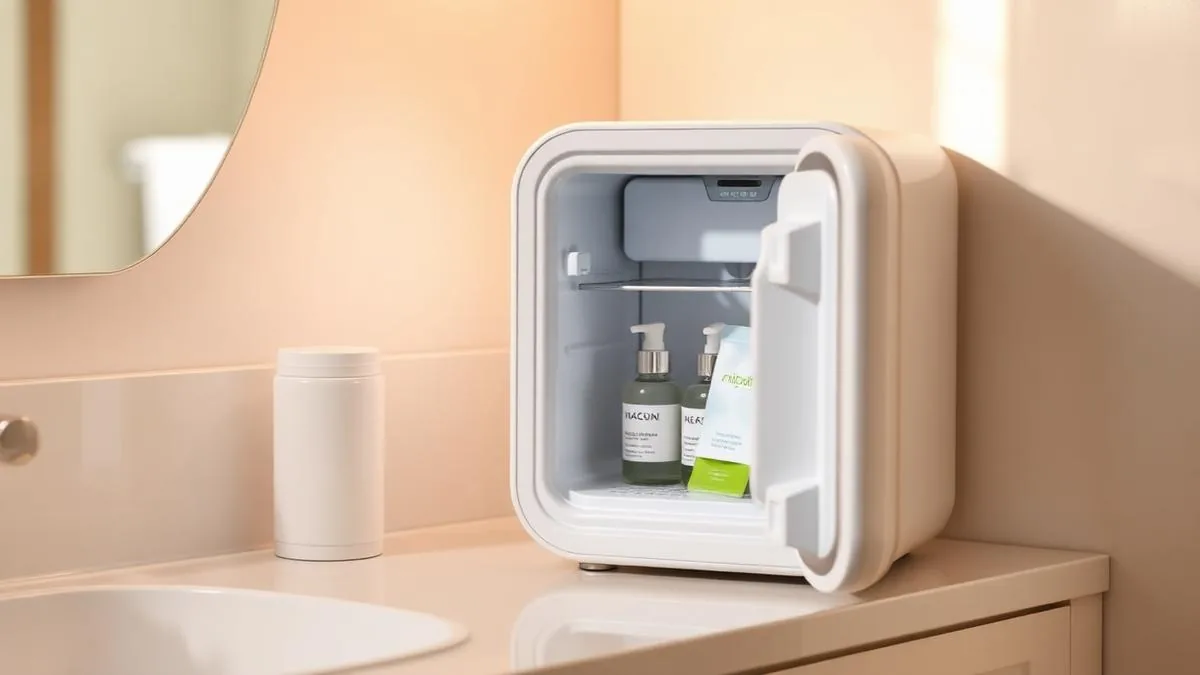
Short answer: for some people, yes. For most people with a three-product routine, no.
Recommended Skincare Fridges
| Pick | Product | Est. Price | Action |
|---|---|---|---|
| Best overall | Cooluli Mini Fridge (4L / 6 can) | $49.99 | View on Amazon |
| Best larger capacity | Frigidaire Mini Personal Fridge (10L / 15 can) | $59.99 | View on Amazon |
| Best budget option | CROWNFUL Mini Fridge (4L / 6 can) | $39.99 | View on Amazon |
Cooluli Mini Fridge (4L / 6 can)
$49.99
Frigidaire Mini Personal Fridge (10L / 15 can)
$59.99
CROWNFUL Mini Fridge (4L / 6 can)
$39.99
As an Amazon Associate we earn from qualifying purchases at no extra cost to you. Prices are estimates and may change.
That's a less exciting answer than "yes, buy one immediately" — but it's the honest one, and the difference comes down to what's actually in your bathroom cabinet.
Heat degrades certain skincare ingredients measurably. It does nothing to others. A skincare fridge is worth the money if you own the first kind and a waste if you only own the second. This guide breaks down exactly which is which, so you can decide before spending anything.
What a skincare fridge actually is
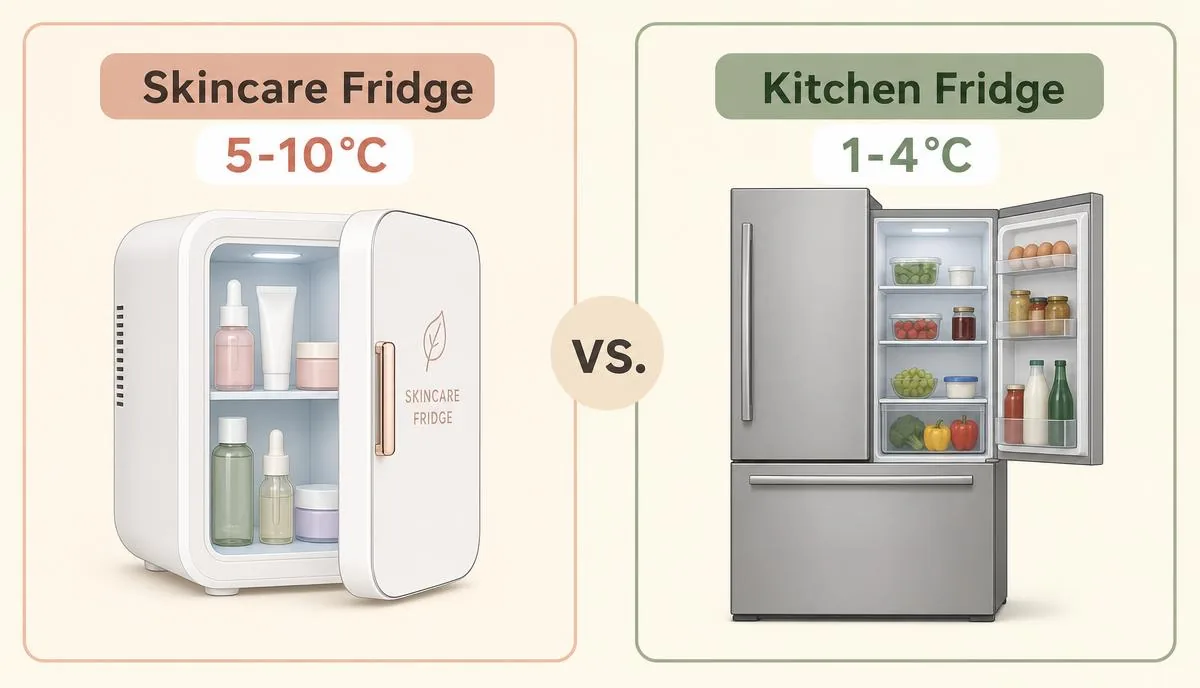
A skincare fridge is a small thermoelectric cooler, usually 4 to 12 litres, that holds a steady temperature somewhere around 5–10°C (40–50°F). That's noticeably warmer than a kitchen fridge, which typically runs at 1–4°C.
That temperature difference matters more than people realise, and we'll come back to it.
Unlike a compressor fridge, these units use thermoelectric (Peltier) cooling. They're quiet, they don't vibrate, and they cool relative to room temperature rather than to a fixed setpoint — usually about 15–20°C below ambient. In a hot room, a skincare fridge will be warmer than in a cool one.
Why heat is the real enemy (the actual chemistry)
Skincare doesn't "go off" the way milk does. It degrades — slowly, invisibly, and mostly through three mechanisms:
Oxidation. Oxygen reacts with unstable molecules and breaks them down. Heat accelerates this dramatically. Every 10°C rise roughly doubles the rate of most chemical reactions — that's basic reaction kinetics, and it applies to your serum bottle as much as anything else.
Preservative breakdown. The preservative system in a product is what stops bacteria and mould from growing. Heat degrades preservatives over time, which shortens the safe-use window rather than the effective-use window.
Formula separation. Emulsions — anything creamy that combines oil and water — can destabilise at high temperatures, causing separation that doesn't fully reverse.
A bathroom is genuinely one of the worst places to store skincare. Shower steam pushes the room to 25–30°C with high humidity, several times a day. That's the exact environment that accelerates all three problems.
The important nuance: for a lot of products, this doesn't matter much, because you'll finish the bottle long before degradation becomes meaningful. Refrigeration only pays off for products where degradation is fast, visible, and expensive.
What Skincare Should Be Refrigerated
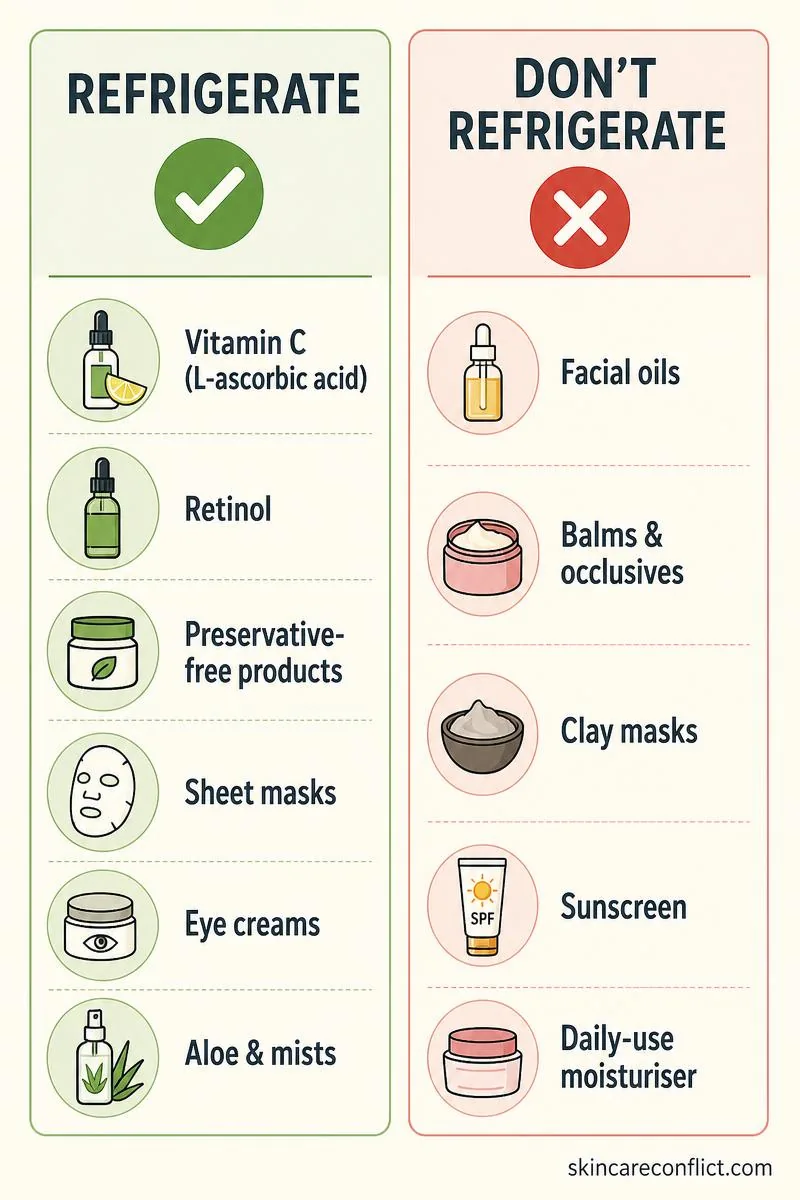
These are the products where cold storage produces a real, measurable benefit.
Vitamin C serums (L-ascorbic acid) — the strongest case
This is the single best reason to own a skincare fridge.
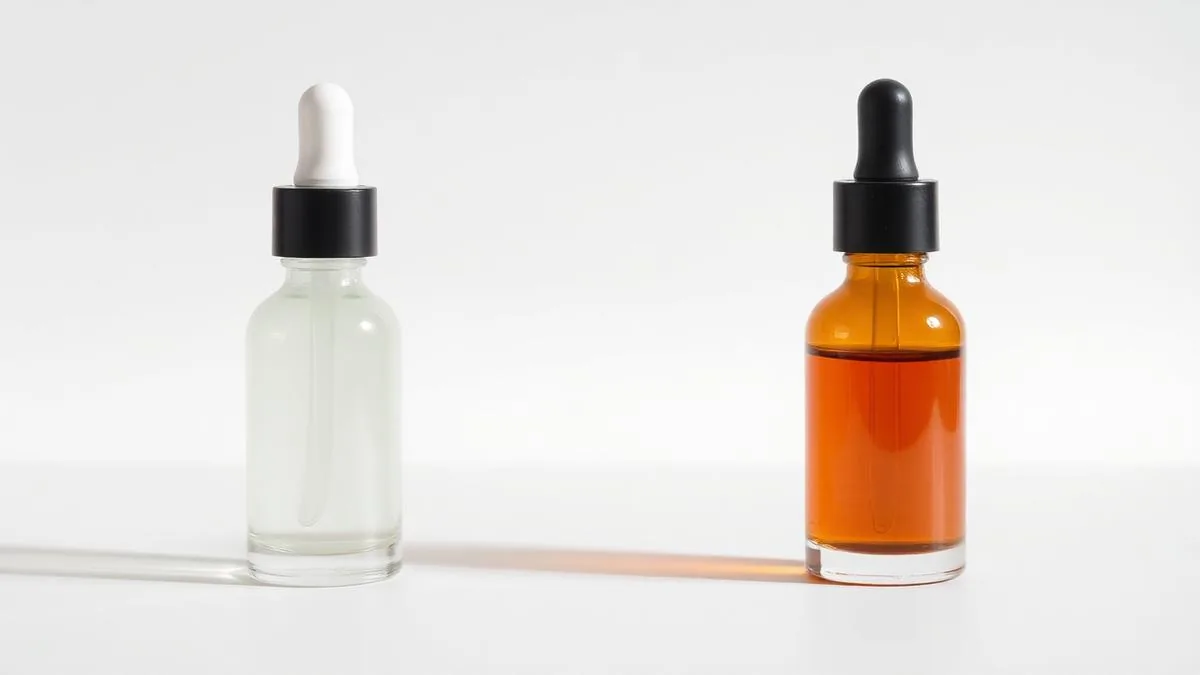
Pure L-ascorbic acid is notoriously unstable. It oxidises on exposure to light, air, and heat — turning from clear or pale straw colour to yellow, then orange, then brown. That colour change isn't cosmetic. It's the ascorbic acid converting to dehydroascorbic acid and then to inactive breakdown products. An orange vitamin C serum is doing nothing for your skin, and some evidence suggests oxidised vitamin C may contribute to the free radical damage it was supposed to prevent.
At room temperature in a warm bathroom, a 20% L-ascorbic acid serum can visibly oxidise within 4–8 weeks of opening. Refrigerated, that window extends considerably.
If you're spending $30–$180 on vitamin C serums, a $50 fridge pays for itself quickly.
Worth noting: more stable vitamin C derivatives — sodium ascorbyl phosphate, magnesium ascorbyl phosphate, ascorbyl glucoside, tetrahexyldecyl ascorbate — don't have this problem to anywhere near the same degree. If your serum contains derivatives rather than L-ascorbic acid, refrigeration is optional. Not sure which you have? Check the ingredients list for "ascorbic acid" as the first active.
Related reading: Best Vitamin C Serums 2026 and Vitamin C + Niacinamide.
Retinol and retinoids
Retinol is photosensitive and thermolabile — it degrades with both light and heat. This is why quality retinol products ship in opaque, airless packaging rather than clear droppers.
Refrigeration slows that degradation. It's a smaller effect than with vitamin C, but for anyone who bought a higher-strength retinol and only uses it three nights a week, the bottle will be open for months. Over that timeframe, cold storage genuinely helps preserve potency.
One caveat: some thick retinol creams stiffen when cold and become harder to spread evenly. If yours does, take it out 10 minutes before use.
Related reading: Best Retinol Serums 2026 and Retinol Before and After: Week-by-Week Timeline.
Products with few or no preservatives
"Preservative-free," "clean," and "natural" formulations have shorter shelf lives by definition — that's the trade-off for the shorter ingredient list. Cold storage slows microbial growth and extends usable life. If you buy from small-batch or preservative-free brands, this is one of the strongest arguments for a fridge.
Sheet masks and eye products (the comfort argument)
This one is honest but different: chilled sheet masks and eye creams don't work better chemically. They feel better, and that feel has a real short-term effect.
Cold causes temporary vasoconstriction — blood vessels narrow, which visibly reduces puffiness and under-eye swelling for 20–60 minutes. It's not a lasting treatment, it's a temporary cosmetic effect. But it's a genuine one, and it's why chilled eye masks are a fixture of every pre-event routine.
If de-puffing before work or an event matters to you, that alone might justify the purchase.
Aloe, after-sun, and facial mists
Same logic. The cooling sensation on irritated, sunburned, or post-treatment skin is soothing and genuinely pleasant. Cold aloe on a sunburn is meaningfully more comfortable than room-temperature aloe.
What You Should NOT Put in a Skincare Fridge
This is the part the listicles skip, and it's where people damage products.
Oil-based products and facial oils
Oils can solidify, cloud, or partially crystallise when chilled. Some recover fully at room temperature; some don't fully re-emulsify. Rosehip, argan, marula, squalane — leave them out.
Thick balms, ointments, and occlusives
Cleansing balms, petrolatum-based products, and heavy occlusives become hard and unusable when cold. There's no upside — these formulas are extremely stable at room temperature anyway.
Clay masks
Clay formulations can dry out, crack, or separate with temperature cycling. Store at room temperature.
Sunscreen — this one matters
Do not refrigerate sunscreen. Repeated temperature swings can destabilise the emulsion and compromise the even distribution of UV filters across your skin — which is the entire mechanism by which sunscreen protects you. A destabilised sunscreen may provide uneven coverage even if it looks fine in the bottle.
Store sunscreen at room temperature, out of direct sunlight, and replace it annually. This matters more than almost any other storage decision.
Related reading: SPF Calculator.
Anything you use daily and finish within 3 months
If you go through a moisturiser every 8 weeks, refrigeration is doing nothing for you. Degradation over that timeframe is negligible. Save the fridge space for the expensive, slow-use actives.
Do Skincare Fridges Actually Work? (Skincare Fridge vs Regular Fridge)
They work, but understand what "work" means here.
A thermoelectric skincare fridge holds roughly 5–10°C. A kitchen fridge holds 1–4°C. For preservation purposes the kitchen fridge is technically more effective — colder means slower reactions.
So why not just use the kitchen fridge? Three honest reasons:
Temperature. For emulsions, 1–4°C can be too cold and cause separation. The 5–10°C range is a better balance between preservation and formula stability.
Contamination and practicality. Storing open skincare next to raw food isn't ideal, and most people won't actually maintain the habit of walking to the kitchen twice a day. A fridge on your vanity gets used. One in the kitchen doesn't.
Temperature cycling. A kitchen fridge is opened constantly, causing repeated warm-cool cycles. Cycling is harder on formulations than a stable temperature is.
The honest verdict: if you already keep your vitamin C in the kitchen fridge and it works for you, a skincare fridge is a convenience upgrade, not a necessity. If you don't — and you won't — the dedicated fridge is what actually changes your behaviour.
Does a Skincare Fridge Extend Shelf Life?
Yes, but with an important limit.
Refrigeration slows chemical degradation. It does not reset or extend the PAO (Period After Opening) — the little open-jar symbol on your packaging showing 6M, 12M, and so on. That figure is set by preservative efficacy testing conducted at standard conditions, and manufacturers don't publish separate refrigerated figures.
Practically: refrigeration meaningfully preserves potency — your vitamin C stays effective longer. It's less reliable for extending safety, because once a preservative system degrades or a product is contaminated, cold slows growth but doesn't stop it.
Rule of thumb: refrigeration helps your actives keep working. It doesn't make an expired product safe.
Not sure how old your products actually are? Our free skincare expiration date checker decodes the batch code on 50+ brands and tells you the manufacture date and remaining safe-use window.
So — Is It Worth It For You?
A skincare fridge is worth it if you:
- Use L-ascorbic acid vitamin C serums
- Own retinol or other actives you use a few times a week over several months
- Spend $50+ per bottle on serums
- Buy preservative-free or small-batch products
- Live somewhere hot or humid, or store products in a steamy bathroom
- Want the de-puffing benefit of chilled eye products
Skip it if you:
- Have a simple cleanser / moisturiser / SPF routine
- Finish products within 2–3 months
- Mainly use oil-based or balm products
- Have very limited counter space
- Expect it to improve your skin (it protects products, it doesn't treat skin)
What to Look For If You Buy One
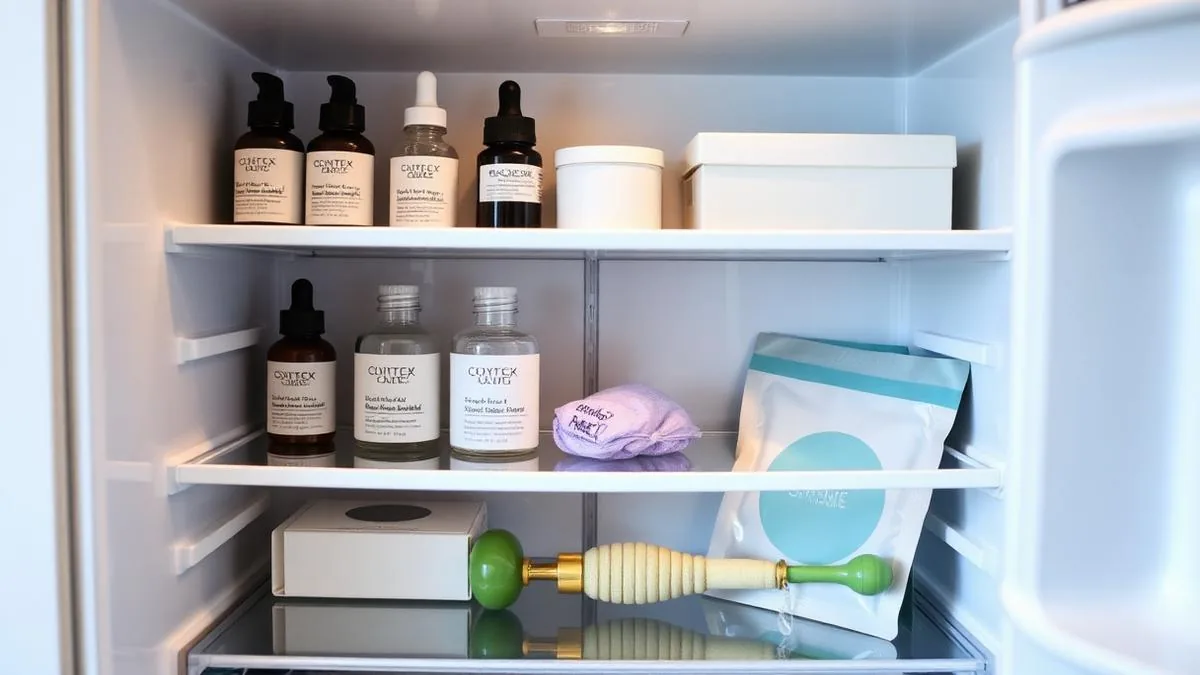
Capacity. 4L holds roughly 6–8 standard products — enough for actives only. 10–12L fits a full routine plus sheet masks. Most people underestimate and upgrade later, so buy one size up from what you think you need.
Thermoelectric, not compressor. Every mainstream skincare fridge is thermoelectric. It's quieter and has no vibration. The trade-off is that cooling is relative to room temperature, so performance drops in very hot rooms.
Noise level. Look for units rated around 25dB or lower if it's going in a bedroom.
AC and DC power. Dual 110V AC / 12V DC means it works in a car too — useful if you travel.
Skip the mirror unless you want it. LED mirror doors look good and add cost. They don't affect cooling performance.
Skincare Fridges We Recommend
Affiliate disclosure: As an Amazon Associate we earn from qualifying purchases at no extra cost to you.
Best overall
Cooluli Mini Fridge (4L / 6 can)
The most widely recommended skincare fridge, and the one most reviewers default to. Thermoelectric cooling with a warming function, dual AC/DC power, and a footprint small enough for a vanity. 4L is enough for your actives — vitamin C, retinol, eye cream, a few masks. If you only want to protect the expensive stuff, this is the right size.
Check Price on Amazon →Best larger capacity
Frigidaire Mini Personal Fridge (10L / 15 can)
If you want your full routine chilled plus sheet masks and a jade roller, 10L is the size that stops you upgrading in six months. Same thermoelectric system, more shelf space, still quiet enough for a bedroom.
Check Price on Amazon →Best budget option
CROWNFUL Mini Fridge (4L / 6 can)
ETL listed, cooling and warming modes, and typically cheaper than the Cooluli. If you mainly want somewhere cold for a vitamin C serum and don't care about brand, this does the job.
Check Price on Amazon →A cheaper alternative worth considering first
If you're not sure a fridge is justified yet, the highest-value upgrade for most people is packaging, not temperature.
Transferring an oxidation-prone serum into an airless pump bottle removes the single biggest degradation factor — air exposure. Airless pumps cost a fraction of a fridge and, for vitamin C specifically, arguably do more.
Cheap upgrade
Airless Pump Bottles (refillable, 4-pack)
Transfer decanted vitamin C or retinol to slow oxidation dramatically. Cheap fix, real difference.
Check Price on Amazon →Cheap upgrade
Amber Glass Dropper Bottles (30ml, 12-pack)
Light is the other major degradation factor. Amber glass blocks UV and visible light that clear droppers let straight through.
Check Price on Amazon →Frequently Asked Questions
Not sure how old your current products are? Check any batch code free with our skincare expiration date checker — supports 50+ brands.
Content on this site is written for educational purposes. It is not medical advice. Always consult a qualified dermatologist for personal skincare concerns.